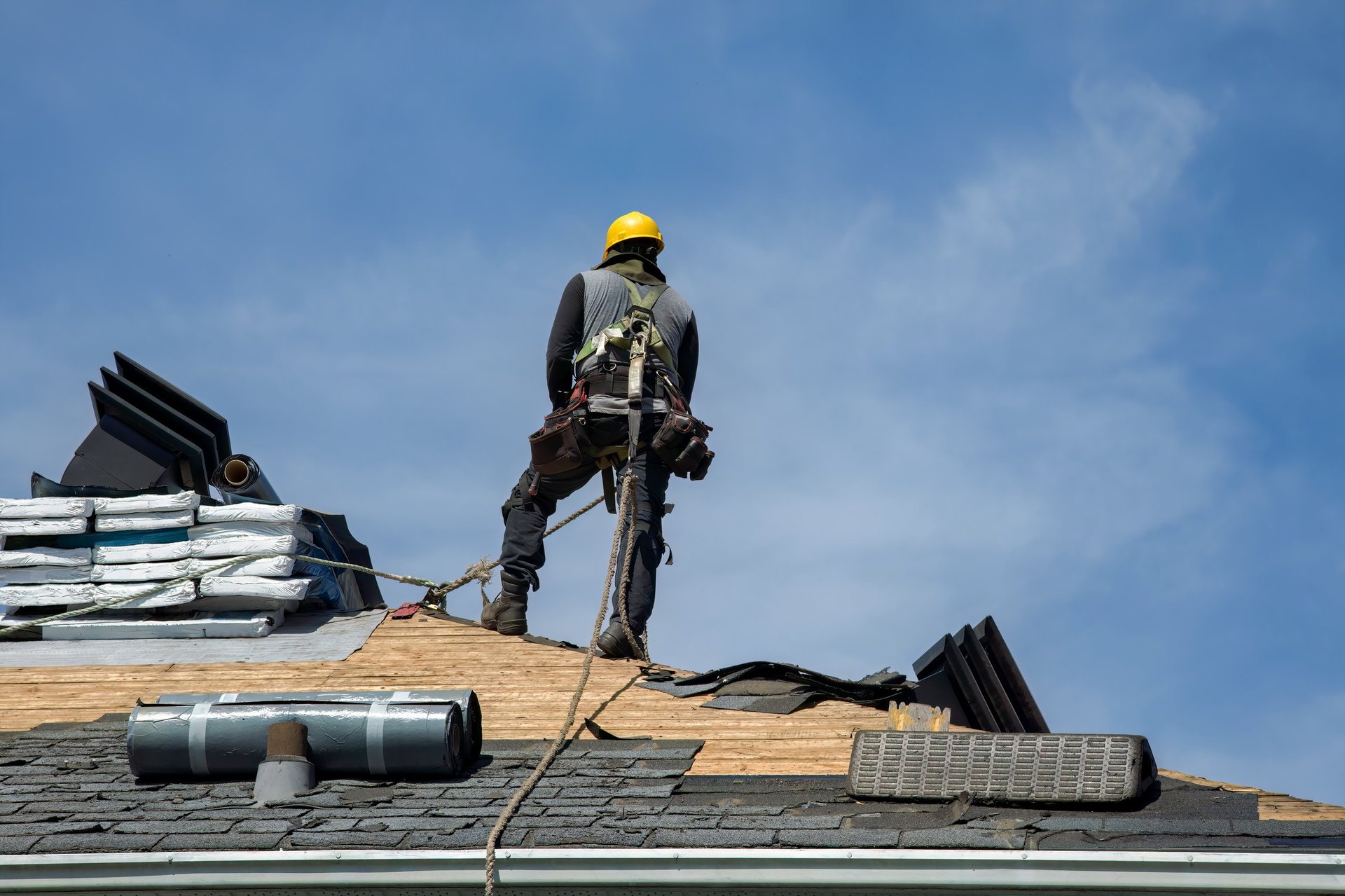
Professional roofer at work
Roofing Industry

Why Good Roofers Lose Work to Worse Competitors - And How to Stop It

The marketing foundations every roofing company needs in place before spending a single penny on ads, SEO, or social media.

Updated May 2026
14 min read
"The roofer who wins the job isn't always the best roofer. He's usually just the one the homeowner trusted first."

This guide is about becoming that roofer and building the foundations that make it happen consistently.

What You'll Learn

1

Your Google Business Profile, the most overlooked free tool in roofing

2

Your website: is it helping or costing you jobs?

3

Reviews: how to get them, why they're worth more than any ad

4

The follow-up system most roofers ignore

5

Social proof that actually converts

6

Before you run any ads — a checklist

Most roofing companies that come to us for marketing help share a common problem: they've been spending money on Google Ads, Facebook campaigns, or a new website and they're not seeing a return. When we dig into the detail, the issue is almost never the ads themselves.

It's the foundations underneath them.

Think of it like this: running paid advertising without solid marketing foundations is like putting a new roof on a house with a rotting structure. It looks fine from the outside for a while but it won't hold up, and the money is wasted.

This guide is written specifically for roofing businesses, whether you're a sole trader, a small crew, or scaling towards a larger operation. We're going to walk through every foundational element your business needs in place before marketing spend will truly work. And the good news? Most of these are free or very low cost.

01

Your Google Business Profile

The Most Powerful Free Tool in Roofing

When a homeowner in your area needs a roofer right now, after a storm, a leak, or a survey finding, the first thing they do is search Google. What they see in those first few results will determine who they call. And the businesses that appear in the "map pack" (the three businesses shown on the map) get the vast majority of those calls.

Your Google Business Profile (GBP) is what puts you there. And the overwhelming majority of small roofing companies either don't have one, haven't claimed theirs, or have one that's half-filled-out and stale.

What to do right now

If you haven't claimed your Google Business Profile, go to business.google.com and do it today. It costs nothing. Once it's claimed:

  • Add your exact business name, address, and phone number — and make sure these match exactly what's on your website
  • Write a proper business description (250+ words) that mentions your service area, the types of roofing you do, and why customers choose you
  • Add every relevant service category — flat roofing, pitched roofing, guttering, fascias, emergency repairs, etc.
  • Upload at least 20 photos — before and after shots, your team, your van, completed jobs
  • Set your service area to include every town or postcode you genuinely cover
  • Add your business hours and keep them accurate
  • Switch on messaging so customers can contact you directly through Google

Why photos matter more than you think

Google's own data shows that businesses with photos on their profile receive significantly more direction requests and website clicks than those without. For a roofing company, before-and-after photos of completed jobs are your single most powerful trust signal and they cost you nothing but a few minutes with your phone camera.

Consistency is everything

One thing that trips up many roofing companies: inconsistency across the internet. If your Google profile says "J. Barker Roofing Ltd" but your website says "Barker Roofing" and your Facebook page says "Barkers Roofers," Google sees these as potentially different businesses. This hurts your local search rankings. Pick one consistent name and use it everywhere, exactly the same, every time.

02

Your Website

Is It Helping or Costing You Jobs?

A lot of roofing companies either have no website, or have a website that's doing more harm than good. Here's the honest truth: a bad website can actually lose you work, because it signals to homeowners that you're not a serious, established business.

You don't need a flashy site. You need a functional one that answers the homeowner's questions quickly and makes it easy to contact you.

8sec

Average time before a visitor decides whether to stay or leave

57%

Of roofing searches happen on mobile devices

More likely to be contacted when you have visible reviews

The five pages every roofing website must have

1

Home Page

Who you are, what you do, what area you cover, and a clear call to action (phone number, quote form)

2

Services Pages

A separate page for each major service you offer (flat roofing, pitched roofing, guttering, etc.). This is critical for SEO.

3

Area Pages

A page for each main town or city you cover. "Roofers in Burnley," "Roofers in Accrington," etc. These are gold for local SEO.

4

Reviews / Testimonials Page

Embed your Google reviews or display written testimonials with the customer's first name and town

5

Contact Page

Phone number (clickable on mobile), a simple form, and your general service area shown on a map

The mobile test you must pass

Pull out your phone right now and visit your own website. Ask yourself:

  • Can I find the phone number within three seconds?
  • Does the page load quickly?
  • Is the text readable without zooming?

If the answer to any of these is no, that's costing you leads today because over half of roofing searches happen on a mobile device.

A word about DIY website builders

Platforms like Squarespace, Wix, or even a well-configured WordPress site are perfectly adequate for a roofing company's website. You do not need to spend thousands on a custom-built site to compete locally. What you do need is someone who understands local SEO to help set it up correctly, or take the time to learn the basics yourself using free resources like Google's own Search Central documentation.

03

Reviews

Worth More Than Any Ad You'll Ever Run

If there is one single thing that has the biggest impact on a roofing company's ability to win new business, it's reviews. Not ads. Not social media. Reviews.

Here's why: roofing is a high-ticket, high-trust purchase. A homeowner getting their roof replaced is typically spending thousands of pounds or dollars. They are not going to hand that money to someone they've never heard of, with no evidence of the quality of their work. Reviews are that evidence.

How to get more reviews (without begging)

The most effective system is simple: ask every satisfied customer at the right moment. The right moment is immediately after the job is complete and they've expressed they're happy — not two weeks later by email when the feeling has faded.

  1. 1

    Create a direct Google review link (search "Google review link generator" — it takes 30 seconds) and save it in your phone

  2. 2

    When a customer tells you they're happy, say: "That means a lot — would you mind leaving us a Google review? It genuinely helps our business. Here's the link." Then text or WhatsApp it to them on the spot.

  3. 3

    Follow up once — a polite text 48 hours later if they haven't left one yet

  4. 4

    Aim for a minimum of 25 Google reviews before running any paid advertising

  5. 5

    Respond to every review — including the negative ones. How you handle criticism is watched by future customers.

How to respond to a negative review (without making it worse)

Never argue, never get defensive, and never ignore it. Respond calmly, acknowledge their experience, and offer to speak directly to resolve it. Something like:

"We're sorry your experience didn't meet expectations, we take all feedback seriously and would welcome the chance to speak with you directly."

This shows future customers that you're professional and care about your work.

Beyond Google: where else do reviews matter?

Google is the priority. But for roofing, profiles on Checkatrade, Rated People, and Trustpilot also carry weight with certain homeowners. Don't spread yourself too thin, get your Google reviews strong first, then consider these as secondary channels.

04

The Follow-Up System

Most Roofers Ignore

Here's a scenario that plays out hundreds of times every day in the roofing industry: a homeowner enquires about a quote. The roofer visits, gives the quote, and then... nothing. No follow-up. And the homeowner, who actually wanted the job done, just went with someone else who called them back.

Studies consistently show that the majority of sales go to the first business to follow up. In roofing, where homeowners are often getting three or four quotes, the speed and persistence of your follow-up is often the deciding factor.

Build a simple follow-up process

Day 1 — Quote confirmation

Send a quote confirmation the same day you visit, even just a WhatsApp message saying "Great to meet you today, I'll have your quote over by [time]"

Day 3 — First follow-up

Follow up two days after sending the quote if you've heard nothing. A simple "Just checking you received the quote — happy to answer any questions" is enough.

Day 5 — Second follow-up

Follow up again after five days. Most roofers give up after one attempt. You simply staying in touch — politely, is enough to win the job in many cases.

Track everything

Use a free CRM (Customer Relationship Management) tool like HubSpot's free tier or even a basic spreadsheet to track who you've quoted and when you last contacted them

Learn from losses

Ask every customer who goes with someone else: "Would you mind letting us know why?" This feedback is invaluable and costs nothing.

05

Social Proof

That Actually Converts

"Social proof" is the marketing term for the evidence that other people trust you. In roofing, this goes beyond just Google reviews. It's the full picture a prospective customer builds about your company before they decide to contact you.

The before-and-after photo strategy

Every single job you complete is a marketing asset, if you photograph it. Before-and-after photos of roofing work are exceptionally powerful for a few reasons:

  • They demonstrate the quality of your work in a way that words can't
  • They're shareable on social media
  • They help your Google Business Profile rank higher
  • They give homeowners with similar roofs a direct point of reference

Make it a habit. At the start of every job, take several photos from multiple angles. At the end, take the same shots. Upload them to your Google profile, your website gallery, and your social media. This compounds over time.

Accreditations and guarantees

If you're a member of the NFRC, Competent Roofer, or any other industry body, display this prominently on your website and your van. Many homeowners don't fully understand what these mean, but they understand that they signal professionalism and accountability.

If you offer a workmanship guarantee, state it clearly with the exact terms. "10-year workmanship guarantee" on a quote or your website header converts better than almost any other single line of copy.

Case studies: your secret weapon

A case study is simply a short story about a completed job: the problem the homeowner had, what you did to fix it, and the result. Even a 200-word case study with photos, posted on your website, builds significant trust.

Three or four of these covering different job types (flat roof replacement, chimney repair, storm damage, full re-roof) demonstrates both your range and your reliability in a way that no amount of general marketing copy can.

06

Before You Run Any Ads

Your Pre-Flight Checklist

Paid advertising, whether that's Google Ads, Facebook Ads, or lead generation platforms, can work extremely well for roofing companies. But only when the foundations are in place. Here's a simple checklist to run through before you spend any money on ads:

If you can tick all of these, paid advertising will amplify what's already working. If you can't, fix these first, because the money you spend on ads will largely be wasted converting visitors who then can't find enough trust signals to pick up the phone.

Where to Go From Here

The foundations covered in this guide aren't glamorous. They don't feel like "marketing" in the way that a slick ad campaign does. But they are the difference between a roofing business that relies on word of mouth and the occasional lucky referral, and one that has a consistent, predictable flow of quality enquiries.

Start with one.

Pick whichever foundation feels most underdeveloped in your business right now, and spend a focused hour on it this week. Then the next. Consistency over time is what compounds into a business that wins, even against competitors with bigger budgets.

If you'd like help putting any of these in place, whether that's your Google profile, your website, or a broader marketing strategy for your roofing business, we'd be glad to help.

Ready to Build Your Marketing Foundations?

We help roofing companies put the right systems in place, so every pound you spend on marketing works harder.

Get in Touch